
Growing up, I thought strawberries came with two ingredients:
Strawberries – and sugar.
It didn’t matter whether we were eating them with breakfast or serving them with shortcake. My family always sprinkled sugar over the top.
We did it so consistently that I assumed everyone ate strawberries that way.
And I thought I loved strawberries.
Then one day at school, I ate a strawberry that didn’t have sugar on it.
I remember biting into it and wondering:
Why does this taste so bad?
It wasn’t rotten. It wasn’t underripe. It tasted exactly like a strawberry was supposed to taste.
But compared to the sugar-coated strawberries I was accustomed to, its natural sweetness barely registered.
For a long time, I couldn’t enjoy strawberries without adding sugar. As I gradually made other changes to my diet, though, I kept giving them another chance.
Eventually, something changed.
Strawberries started tasting sweeter.
Then they began tasting better without sugar than they ever had with it.
Today, I can’t imagine sprinkling sugar on fresh strawberries unless I’m using them in a dessert. They already taste incredibly sweet on their own.
The strawberries didn’t change.
My taste buds – and my expectations – did.
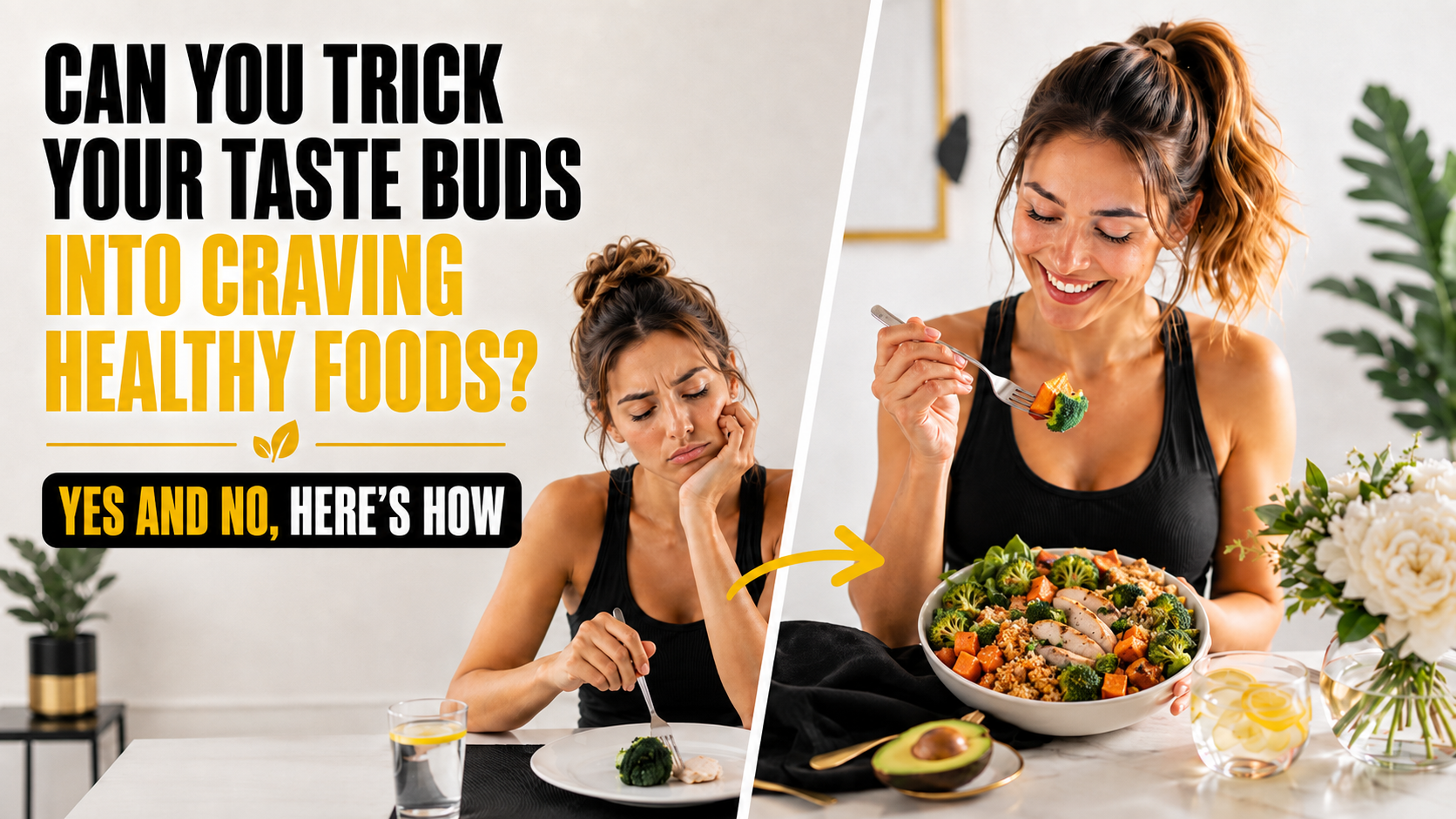
If you’re trying to eat more whole foods and wondering, “Why is it so hard to eat healthy?” you may be experiencing the same thing.
There’s nothing wrong with you.
You may simply be asking your brain and palate to adjust from foods designed to deliver intense flavors to foods with more natural levels of sweetness, saltiness and richness.
That transition can feel strange at first.
The good news is that it doesn’t have to feel strange forever.
Why Is It So Hard to Eat Healthy at First?
Imagine watching action movies with the volume turned all the way up every day.
Then someone turns the volume down to a normal level.
The movie isn’t silent. Your ears are working perfectly well. But for a while, normal volume feels underwhelming.
Food can work similarly.
Many ultra-processed foods contain concentrated combinations of sugar, fat, refined carbohydrates and sodium. They may also be designed with specific textures, flavors and aromas that make them especially rewarding and easy to continue eating.
Researchers use the term hyper-palatable foods to describe foods containing certain combinations of fat, sugar, carbohydrates and sodium that may make them unusually appealing. These foods aren’t defined by one ingredient alone. It’s often the combination that creates the experience.
Think about how differently these foods hit your palate:
Plain potatoes compared with potato chips
Fresh fruit compared with fruit-flavored candy
Oatmeal compared with a frosted breakfast pastry
Grilled chicken compared with breaded chicken covered in a sweet and salty sauce
The whole foods don’t necessarily taste bad.
They’re just competing with flavors that have had the volume cranked all the way up.
This is one reason switching to a primarily whole-food diet can initially feel unsatisfying. Your brain has learned what level of sweetness, salt and richness to expect.
There’s also a practical difference.
Opening a package requires almost no thought. Building a meal from whole-food ingredients may require washing produce, cooking protein or deciding what you’re going to eat before you become ravenously hungry.
That preparation doesn’t have to take hours, but it does require planning.
The payoff is that a few minutes of planning today can save you time, money and decision-making energy later in the week.
Ultra-Processed Foods Can Make It Easier to Eat More
It’s important to clarify that “processed” is not automatically synonymous with “unhealthy.”
Frozen vegetables are processed. Greek yogurt is processed. Canned beans are processed. A bag of prewashed spinach is processed – and may make eating vegetables significantly easier.
The goal isn’t to become afraid of any food that comes in a package.
Ultra-processed foods generally go several steps further. They often contain refined ingredients, additives and flavor combinations that would be difficult to recreate in an ordinary home kitchen.
Because they are convenient and intensely palatable, they can also be very easy to eat quickly.
In one controlled clinical trial, participants were given either an ultra-processed or minimally processed diet for two weeks at a time. The meals were designed to provide similar amounts of calories, protein, carbohydrates, fat, sugar, sodium and fiber.
Even so, participants ate approximately 500 more calories per day on the ultra-processed diet and gained weight, while they lost weight during the minimally processed phase. They also ate the ultra-processed meals more quickly.
That doesn’t mean eating a cookie automatically makes you overeat.
It means your food environment matters.
If most of your meals and snacks are engineered to be exceptionally easy to eat, intensely flavored and quickly digested, moving toward simpler foods may initially feel like a dramatic contrast.
That contrast becomes smaller as your palate adapts.
How Often Do Your Taste Buds Change?
You may have heard that your taste buds completely change every seven years.
Thankfully, you don’t have to wait that long to enjoy a strawberry.
Taste-receptor cells are continuously replaced. Different cells have different lifespans, with estimates ranging from roughly 10 days to several weeks. Researchers estimate that, on average, the cells within your taste buds are replaced over approximately one to two months.
However, changing your taste buds isn’t as simple as waiting for old cells to disappear.
Your experience of flavor is also shaped by your sense of smell, past experiences, expectations, habits and repeated exposure.
In other words, new taste-receptor cells don’t automatically wake up one morning demanding broccoli.
But consistently eating foods with less added sugar or salt can change how intensely you perceive those flavors.
In one three-month experiment, people who substantially reduced their simple-sugar intake eventually rated sweet foods as tasting significantly sweeter than the control group did. Interestingly, reducing sugar changed their perception of sweetness more clearly than it changed which level of sweetness they preferred.
That distinction matters.
You may begin noticing the natural sweetness in fruit before you completely stop craving sweeter desserts.
Taste perception can shift, while preferences, habits and emotional associations take more time to catch up.
There is no universal countdown that applies to everyone, but meaningful changes can happen over several weeks to a few months – not only after years of eating perfectly.
Changing Your Taste Buds Doesn’t Require a Food Personality Transplant
People often approach healthy eating as if they need to wake up tomorrow as someone who loves plain chicken breast, steamed broccoli and dry brown rice.
You don’t.
Whole-food meals are allowed to taste good.
In fact, they should taste good if you want to continue eating them.
The goal is not to tolerate miserable meals until you magically become a different person. The goal is to gradually lower the volume on extremely intense foods while learning how to create satisfying meals from nutritious ingredients.
Here’s how to make that transition easier.
How to Make Healthy Food Taste Good
1. Season Your Food
Healthy food does not have to be bland.
Use salt. Use pepper. Use herbs, spices, citrus juice, vinegar, garlic, onion, ginger, mustard and hot sauce.
Roast vegetables instead of always steaming them. Sear your protein. Add fresh herbs at the end of cooking. Experiment with different marinades and spice combinations.
A reasonable amount of salt added to a home-cooked meal does not make that meal nutritionally equivalent to an ultra-processed snack containing several layers of refined ingredients.
You are not earning bonus health points for choking down unseasoned chicken.
2. Include a Satisfying Source of Fat
Fat contributes flavor, texture and staying power.
It can also help you absorb more fat-soluble nutrients from your meal.
That could mean:
Olive oil on roasted vegetables
Avocado in a burrito bowl
Peanut butter stirred into oatmeal
Cheese on your eggs
Nuts or seeds added to yogurt
A flavorful dressing on your salad
You don’t need to pour half a bottle of oil over everything. A thoughtful portion can make a meal feel substantially more complete.
Pair that fat with protein, produce, and a satisfying carbohydrate, and you have a meal – not a collection of dry flavorless foods sitting near one another.
3. Reduce Intensity Gradually
You don’t have to replace every familiar food overnight.
Try gradually reducing how much sugar you add to coffee or oatmeal. Mix sweetened yogurt with plain yogurt. Combine a sugary cereal with a less-sweet option. Alternate flavored water with soda.
Gradual reduction gives your expectations time to adjust without making every meal feel like punishment.
Research on reduced-sweetness beverages has found that both gradual and direct reductions can help people maintain a preference for a less-sweet product, so you can choose the approach that feels most realistic for you.
Some people enjoy ripping off the Band-Aid.
Others do better loosening it slowly.
The best approach is the one you can repeat.
4. Give Meals a Satisfying Ending
When I was making changes to my own diet, I often ate one or two pieces of dark chocolate after a meal.
It gave me something sweet to look forward to and created a clear signal that the meal was finished.
There is some research suggesting dark chocolate may produce greater feelings of satiety and reduce the desire for additional sweets compared with milk chocolate. However, the study was small and used a much larger serving than one or two squares, so it doesn’t prove that a tiny piece of chocolate automatically flips on a fullness switch.
Still, a small, intentional finish can be a useful strategy.
You might try:
A square or two of dark chocolate
A low-sugar mint
Flavored sparkling water
Herbal tea
Berries with Greek yogurt
A naturally sweet piece of fruit
A piece of hard candy
The purpose isn’t to trick your body.
It’s to make your meals feel enjoyable and complete.
5. Keep Convenient “Bridge Foods” Available
Not every food you eat needs to be made from scratch.
Bridge foods can help you move toward a more whole-food-based diet without losing all convenience.
Examples might include:
Rotisserie chicken
Frozen vegetables
Microwaveable rice
Precut fruit
Canned beans
Tuna packets
Greek yogurt
Jarred pasta sauce
Frozen potatoes
Preseasoned meat
Individual cheese portions
These foods may be processed, but they can still help you build balanced meals.
Nutrition exists on a spectrum. You don’t have to leap from drive-through meals to grinding your own flour in a log cabin.
6. Prepare for the Moments When Convenience Usually Wins
Whole-food eating becomes simpler when the easiest option in your kitchen is also a useful one.
Preparation could be as simple as:
Cooking extra protein at dinner
Washing fruit when you bring it home
Keeping frozen vegetables in the freezer
Making several servings of rice at once
Packing tomorrow’s lunch while cleaning up tonight’s dinner
Choosing three repeatable breakfasts for the week
Meal preparation takes some time upfront, but it often gives you that time back later.
You spend less time staring into the refrigerator waiting for inspiration to strike – and less money ordering something because you waited until you were too hungry to cook.
7. Build Your Grocery List Around Basics
Eating more whole foods does not require replacing your entire grocery cart with organic powders, exotic berries and tiny packages labeled “wellness.”
Start with basics such as:
Eggs
Chicken, beef, pork or fish
Greek yogurt or cottage cheese
Rice, oats, pasta and potatoes
Beans and lentils
Frozen fruits and vegetables
In-season produce
Canned tuna or salmon
Olive oil, nuts or peanut butter
Herbs and spices
Ultra-processed foods can look inexpensive, especially when you compare the price of one snack to the price of ingredients for an entire meal.
But a cheap snack that barely touches your hunger may not be the bargain it appears to be.
Whole-food staples can provide protein, fiber, vitamins and minerals while creating meals that keep you satisfied longer. You don’t need the fanciest version of those foods to benefit from them.
You Don’t Have to Completely Eliminate Treats
Cutting back on ultra-processed foods does not mean you can never eat them again.
Trying to create a perfectly “clean” diet often turns food into a test of character.
That isn’t necessary.
Instead of treating certain foods as forbidden, you can become more intentional about when and why you eat them.
Save some treats for moments when they genuinely add something to your life:
The ice cream shop you visit with your family.
The cake at your friend’s wedding.
The appetizer you and your partner love sharing.
The popcorn you eat at the movies.
When every ordinary Tuesday includes five different “special treats,” none of them feel particularly special.
Reducing their frequency can make you more appreciative of them – not more afraid of them.
A primarily whole-food diet still has room for foods chosen purely for pleasure.
The word primarily is doing useful work here.
Healthy Eating Gets Easier When You Stop Expecting It to Feel Effortless Immediately
When someone is learning to lift weights, we don’t expect every movement to feel natural on the first day.
We understand that their body is learning a new skill.
Changing your eating habits deserves the same patience.
You’re learning how to plan differently, shop differently, prepare food differently and notice more subtle flavors.
At first, a strawberry may not seem very sweet.
Then one day, it does.
The foods didn’t suddenly become more flavorful.
You became better at tasting them.
Give yourself enough time and repetition to experience that change before deciding that you simply “don’t like healthy food.”
Your current preferences are not permanent personality traits.
They are patterns – and patterns can change.
Ready for a Plan That Makes Healthy Eating Easier?
Knowing what to do is one thing.
Turning it into a routine that fits your schedule, preferences, goals and real life is another.
Inside the Lock & Key Collective, we help you create a structured approach to training and nutrition without demanding perfection, banning your favorite foods or chasing another short-lived health fad.
You’ll have a plan laid out for you, personalized coaching and the support to keep making progress long enough for your new habits to become your normal.
Doors open soon for our next training cycle, beginning September 1, 2026.
Tap the link below to learn more about the Lock & Key Collective and join the waitlist.