
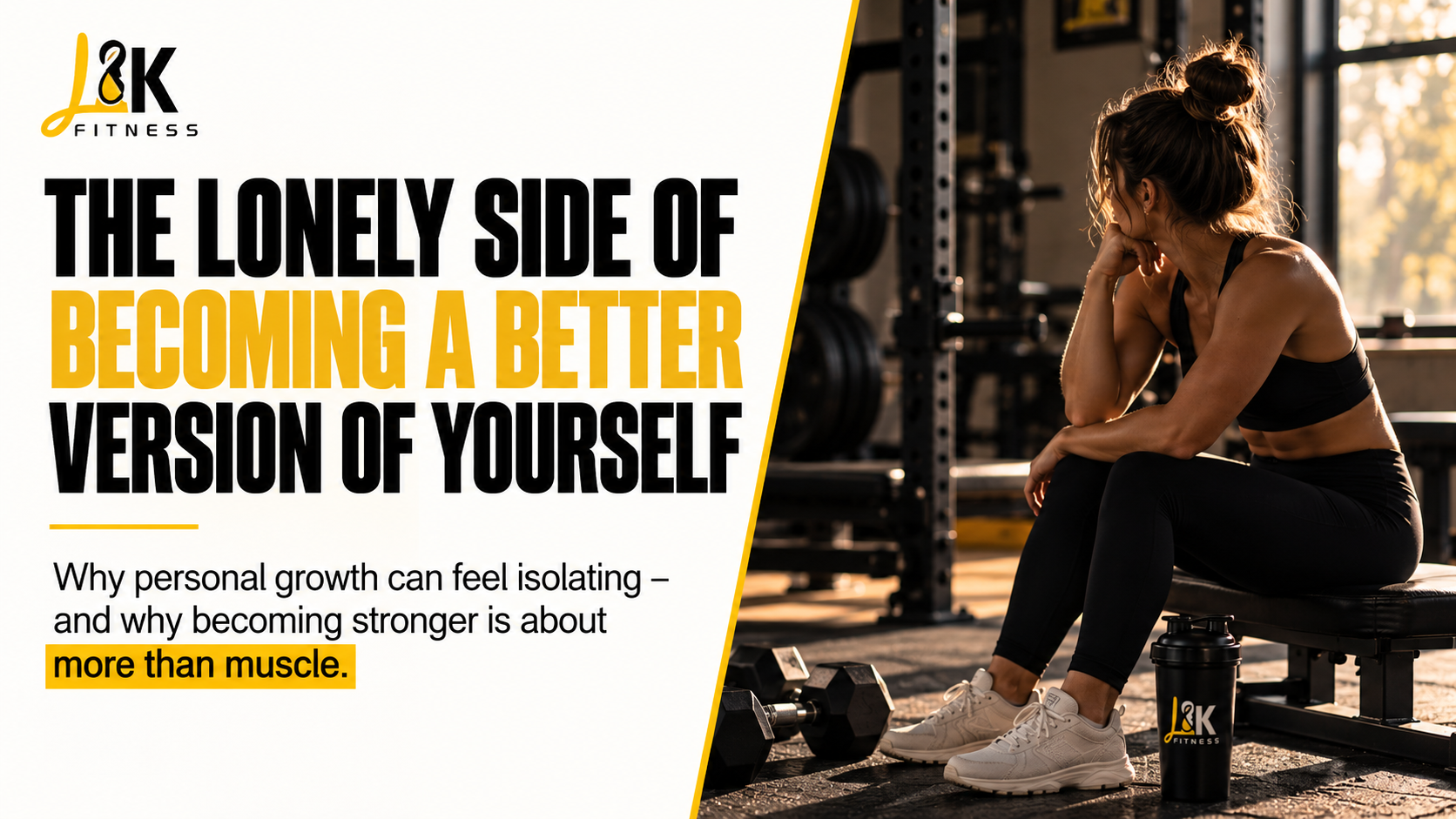
Why personal growth can feel isolating – and why becoming stronger is about more than muscle.
There’s something about personal growth that nobody really prepares you for.
Sometimes improving your life can be a surprisingly lonely experience.
You start making different decisions. Your priorities change. Things you once considered important suddenly don’t matter quite as much.
And sometimes the people around you don’t understand why.
Maybe you’ve started prioritizing your health over going out every weekend. Maybe you’re pursuing a new career, building a business, or simply trying to become someone you can be proud of.
Whatever the reason, you begin realizing that the person you’re becoming doesn’t always fit comfortably into the life you’ve been living.
And that can be uncomfortable as hell.
But here’s something worth remembering:
Personal growth isn’t about becoming better than the people around you. It’s about creating freedom and a better life for yourself.
Growth Doesn’t Require Leaving Everyone Behind
On a recent Mind Pump episode, Michael Smoak discussed the loneliness that can accompany personal growth.
One thing that stood out was how changing your habits can also change your identity. And we believe this to be incredibly true.
If you’ve spent years being the person who never exercises, eats whatever is convenient, or always puts yourself last, those behaviors eventually become part of how you see yourself.
And how other people see you, too.
So when you start changing, you might encounter resistance. Not necessarily because people want you to fail, but because change can be uncomfortable for everyone involved.
But I think some popular self-improvement advice gets this wrong.
You don’t need to cut everyone out of your life just because they aren’t pursuing the same goals you are.
You can love people without sharing all their habits. You can establish boundaries without treating everyone around you like an obstacle.
Sometimes relationships evolve. Sometimes you need to find additional people who understand your goals.
But becoming a better version of yourself shouldn’t require becoming an arrogant asshole in the process.
Confidence Comes From Keeping Promises to Yourself
Confidence develops through following through.
We tend to think we need to feel motivated or confident before taking action.
But more often than not, it works the other way around.
Confidence is built through evidence.
You tell yourself you’re going to train three times this week. And you do it. Proof of your own commitment begins to set in. It’s evidence to yourself that you CAN.
You commit to eating more protein, getting better sleep, or walking every day. And you follow through.
Each time, you’re giving yourself another reason to believe you’re capable of doing what you said you would do.
That’s why we like the idea of establishing a floor for your habits instead of only chasing a ceiling.
We say it all the time: you only ever fall as far as your standards are set. The lower your standards, the harder the fall.
Maybe your ideal training schedule is four days a week, but your minimum is two.
When life gets messy, those two workouts aren’t a failure. They’re what keep you connected to your goals.
The habits you can maintain during difficult weeks often matter more than the routines you can execute during perfect ones.
Sometimes Life Changes You Before You’re Ready
Of course, not all personal growth comes from setting goals.
Sometimes life kicks the absolute shit out of us.
We lose someone we love. A relationship ends. Our health changes. Something happens that makes everything we thought mattered suddenly feel insignificant.
Loss, grief, and pain are powerful agents and massive emotional levers regarding our behavior and routines.
And here’s something we’ve been thinking about:
When life takes away something we’ve built our identity around, we’re sometimes forced to figure out who we are without it.
Who are you when the career you’ve dedicated years to falls apart? When someone you thought would always be there is gone? When your body can no longer do the things you’ve always taken for granted?
Those aren’t questions you can answer with a motivational quote and a better morning routine.
And we don’t believe every painful experience needs to be treated like some blessing in disguise. Sometimes terrible things happen, and they’re simply terrible.
But we do have some influence over what those experiences eventually bring out in us.
For us, faith has increasingly become part of that process. Not because believing in God somehow prevents hardship, but because it challenges us to look beyond my own circumstances and consider how we’re responding to them.
Are we becoming more compassionate? More humble? Are we allowing difficult experiences to teach me something, or are we letting resentment make those decisions for us?
We don’t always like the answers.
And we certainly don’t always get it right.
But we think those questions matter more than whether we’re meeting some arbitrary definition of success.
Because eventually, personal growth has to become about more than personal achievement.
There’s nothing wrong with wanting to look better, get stronger, or accomplish impressive things. But those achievements alone don’t necessarily give our lives meaning.
Sometimes the greatest measure of our growth isn’t what we’ve accomplished. It’s who we’ve become when life didn’t go according to plan.
And ideally, that growth leaves us with something meaningful to offer the people around us.
You Don’t Have to Do It Alone
There’s value in solitude.
Time to reflect, pray, learn, and figure out what actually matters to you.
But solitude and social isolation aren’t the same thing.
And we think the self-improvement world sometimes gets carried away glorifying the idea of disappearing, cutting everyone off, and grinding in silence.
Human beings benefit from connection.
We need people who encourage us, challenge us, and occasionally tell us when we’re full of shit.
You can become more self-reliant without becoming disconnected.
That’s one of the reasons community matters in coaching.
It’s not just about workouts or nutrition plans. It’s about having people in your corner who understand what you’re working toward and help you stay connected to it when life gets difficult.
The Lock & Key Takeaway
Becoming a better version of yourself isn’t about proving you’re better than anyone else.
It’s about becoming someone who’s better equipped to handle life’s challenges, pursue meaningful goals, and contribute to the people and purposes that matter.
And that kind of growth isn’t always visible in the mirror.
Sometimes it looks like patience. Humility. Setting boundaries. Asking for help.
Or simply continuing to show up when things are difficult.
The purpose of becoming stronger isn’t just to endure more. It’s to have more life to live – and more of yourself to give.
Build Strength to Live Even More Fully
Inside The Lock & Key Collective, we focus on sustainable training, better habits, and building strength that carries you outside the gym. And we do it as a community.
Lasting progress isn’t about perfection. It’s about having guidance, accountability, and support that keeps you leveling up.