
How to Create Routines That Lead to Consistent Fitness Habits

And Why A Simple Morning Routine Sets The Tone For Fitness Success.
If someone had told me ten years ago that I’d willingly wake up before 7 a.m. – even on weekends – I would’ve laughed.
Because before Eric and I started Lock & Key Fitness, I was not a morning person.
I routinely slept until 11 a.m. or noon. My work and workouts happened later in the day, my sleep schedule drifted all over the place, and mornings felt rushed or nonexistent.
Fast forward to now, and I’m up between 6 and 7 a.m. most days – weekends included – without feeling miserable about it.
It didn’t happen overnight.
I didn’t suddenly become magically motivated. I didn’t wake up one day and start doing some influencer’s two-hour, twelve-step miracle morning routine.
It was gradual.
And what actually worked was building a few simple routines that made consistency easier – not trying to change my whole life at once.
If you want consistent workouts, better nutrition, and more energy, your routines matter more than motivation.
And your fitness morning routine matters most of all.
A successful morning routine starts with your evening routine and your weekly routine.
Let’s walk through how to build solid routines that support your fitness consistency – step by step – in a way that works for your life, not some influencers.
Why Your Morning Routine Matters for Fitness Success
Your morning sets the tone for everything that follows.
When mornings feel chaotic, fitness is often the first thing to get dropped. But when your mornings run smoothly, workouts and good nutrition become easier to stick to.
Research consistently shows that habits tied to stable daily cues – like waking up at the same time or exercising at the same time – are easier to maintain long term because they reduce decision fatigue and reliance on motivation.(1)
In other words:
The less you have to decide, the more likely you are to stay consistent.
A good daily routine removes friction. It makes the healthy choice the default choice.
And the anchor habit that makes this possible?
Sleep.
Step 1: Build Your Routine Around Consistent Sleep
Before we talk about workouts, meal prep, or productivity tricks, we need to talk about sleep.
Because if you're exhausted every morning, getting a new routine to stick is much harder.
Your body runs on a circadian rhythm – an internal clock that regulates sleep, alertness, metabolism, and energy levels. Going to bed and waking up at roughly the same time each day helps regulate this system.(2)
This means:
Falling asleep becomes easier.
Waking up feels less challenging.
Energy improves.
Hunger and cravings stabilize.
Workout consistency improves.
So if you’re creating a morning routine, start here:
Sleep Consistency Tips
Aim for a consistent bedtime and wake time – even on weekends.
Begin winding down 60-90 minutes before bed.
Reduce bright screens and phone use late at night.
Lay out clothes or prep breakfast for tomorrow.
Create cues that signal “sleep time” to your brain.
A successful fitness morning routine starts with a successful evening routine.

Step 2: Create a Simple Evening Wind-Down Routine
If mornings feel rushed, evenings are often the problem.
A good evening routine makes tomorrow easier.
Try adding one or two of these:
• Put your phone away 1-2 hours before bed
• Prep breakfast or lunch ahead of time
• Lay out gym or work clothes
• Pack your gym bag
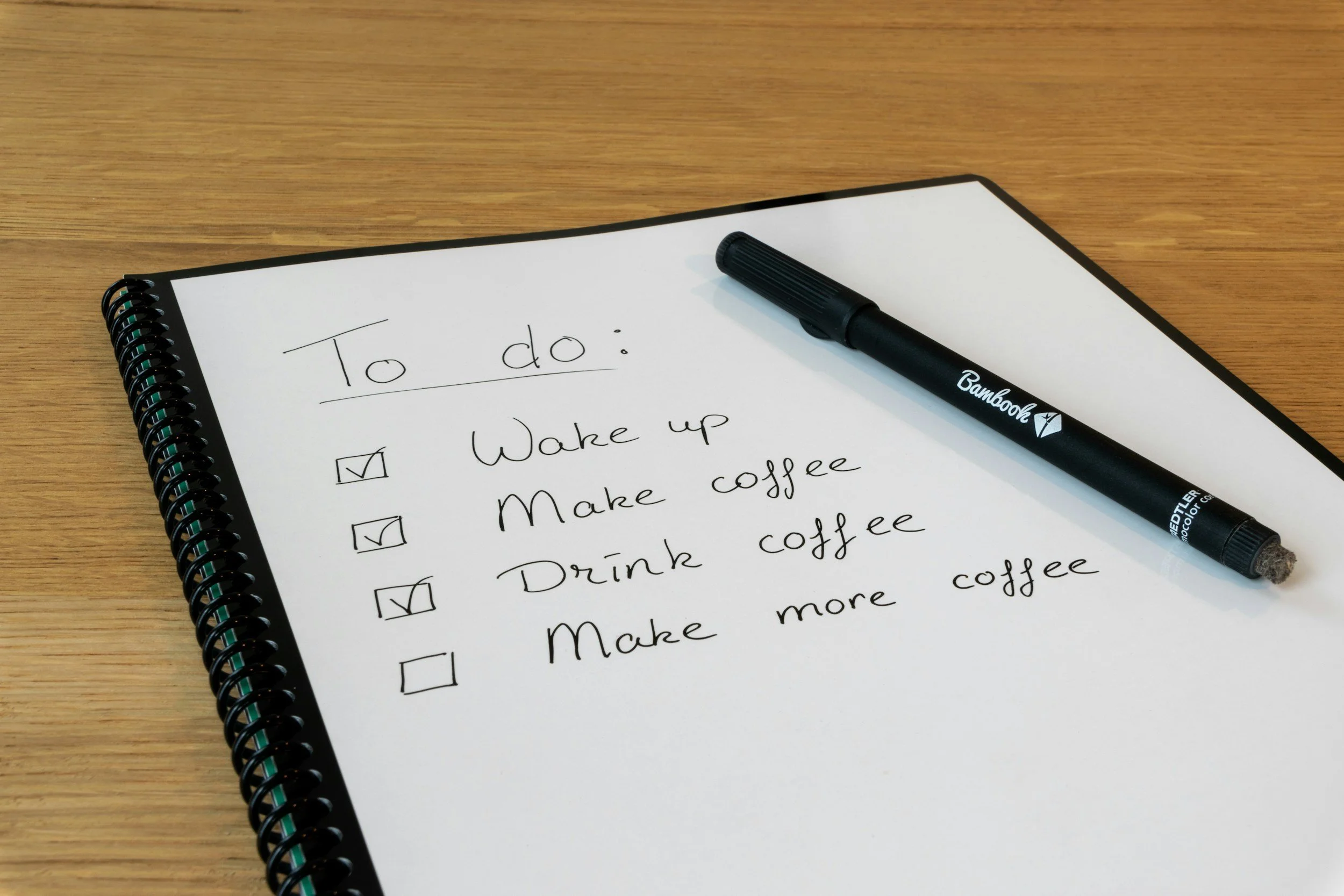
• Write tomorrow’s to-do list
• Dim lights to signal bedtime
These habits reduce morning friction. And when mornings feel calm instead of chaotic, workouts are easier to follow through on.
Step 3: Make Waking Up Easier (Not Miserable)
If you hate mornings, but want to be a morning person – it’s completely possible.
Research shows that light exposure shortly after waking helps reset your circadian rhythm and increase alertness.(3)
If you’re adjusting to an earlier wake up time, there is going to be an adjustment period. It’s important that you wake up at the same time no matter what so that your circadian rhythm can learn your new routine.
Once it adapts, waking up earlier will feel natural and you’ll be less groggy.
Here are practical tips:
Getting Up Without Fighting Yourself
• Move your alarm across the room
• Count down from 5 and sit up immediately
• Get light exposure right away (sunlight or a bright lamp)
• Drink water quickly after waking
• Eat breakfast within ~30 minutes
• Plan something enjoyable for mornings
That last one matters.
Your brain needs a reason to get out of bed.
Examples:
Coffee with your partner
Pet cuddle time
Morning playlist
Podcast walk
Quiet reading
Pre-workout ritual
Gym session you enjoy
A good fitness morning routine doesn’t feel like punishment.
It feels like something you look forward to.
Step 4: Build a Fitness Morning Routine That Actually Fits Your Life
Now we add fitness.
But keep it realistic.
A morning routine doesn’t need to include:
Ice baths
Journaling
Meditation
Yoga
Reading
Breathwork
Gratitude lists
90-minute workouts
Green juice ceremonies
Unless you genuinely enjoy those things and they make your life better.
Instead, your routine might look like:
Wake up → bathroom → water → coffee → gym → shower → work.
Or:
Wake up → walk dog → short home workout → breakfast → work.
Or:
Wake up → stretch → breakfast → work → workout after work.
The goal is consistency, not perfection.
Step 5: Let Weekly Routines Support Your Mornings
This is the part most people miss.
Your weekly routine determines whether your mornings feel calm or chaotic.
When meals and workouts are planned, mornings become easier.
Weekly Habits That Make Mornings Easier
Meal prepping once or twice per week
Saves time daily
Reduces decision fatigue
Improves nutrition consistency
Scheduling workouts ahead of time
Removes daily planning stress
Protects workout time
Improves adherence
Research shows people are significantly more likely to exercise when workouts are scheduled in advance.(3)
Sunday prep can set up your entire week for consistency.
Step 6: Build Slowly (This Is the Secret)
The biggest mistake people make is trying to change everything at once.
Instead:
Start with ONE habit.
Examples:
Consistent wake time.
Lay out gym clothes nightly.
Prep breakfast in the evening.
Walk 10 minutes in the morning.
Stack habits slowly.
Small wins build confidence.
Confidence builds consistency.
Consistency builds results.
Step 7: Stop Chasing Perfect Influencer Routines
Social media routines often look like this:
4:30 AM wake-up
Cold plunge
Meditation
Journaling
Workout
Reading
Green smoothie
Sunrise gratitude ritual
And you think:
“I can’t do all that. So why bother?”
But real success routines look boring.
Wake up. Move. Eat. Work. Repeat.
The people who succeed aren’t doing extreme routines.
They’re doing simple things consistently.
Step 8: Your Routine Should Reduce Stress, Not Add It
Solid routines make you more productive, but that’s not the main purpose.
It’s relief.
Less rushing. Less decision fatigue. Less guilt.
A strong daily routine makes healthy choices your default.
When routines work, you stop debating with yourself every time you need to make a fitness decision.
You just… do the thing. Because it’s engrained in your routine.
And consistency feels simpler.
A Simple Example Routine
Evening
• Phone off at 9 PM
• Gym clothes laid out
• Lunch packed
Morning
• Wake at 6 AM
• Drink water
• Workout at 6:30
• Breakfast after
Weekly
• Meal prep Sunday
• Workouts scheduled ahead
That’s it.
Nothing fancy.
But repeat this for months?
Results become inevitable.
Final Thoughts: Build a Routine That Works for You
A successful morning routine for success doesn’t require perfection.
It requires:
• Consistent sleep
• Simple morning structure
• Weekly preparation
• Small habits stacked over time
Start with one or two habits.
Build slowly.
Let routines support your fitness consistency, not control your life.
References
Lally, P., et al. (2010). How are habits formed: Modelling habit formation in the real world.
https://pubmed.ncbi.nlm.nih.gov/20307145/Walker, M. (2017). Sleep and circadian rhythms research overview.
https://www.ncbi.nlm.nih.gov/pmc/articles/PMC5449130/Khalsa, S.B.S., et al. (2003). Light exposure shifts circadian rhythms.
https://pubmed.ncbi.nlm.nih.gov/12883188/
4. Milkman, K., et al. (2014). Planning and exercise adherence.
https://pubmed.ncbi.nlm.nih.gov/25562690/