
Why People Who Say They Want to Change… Don’t
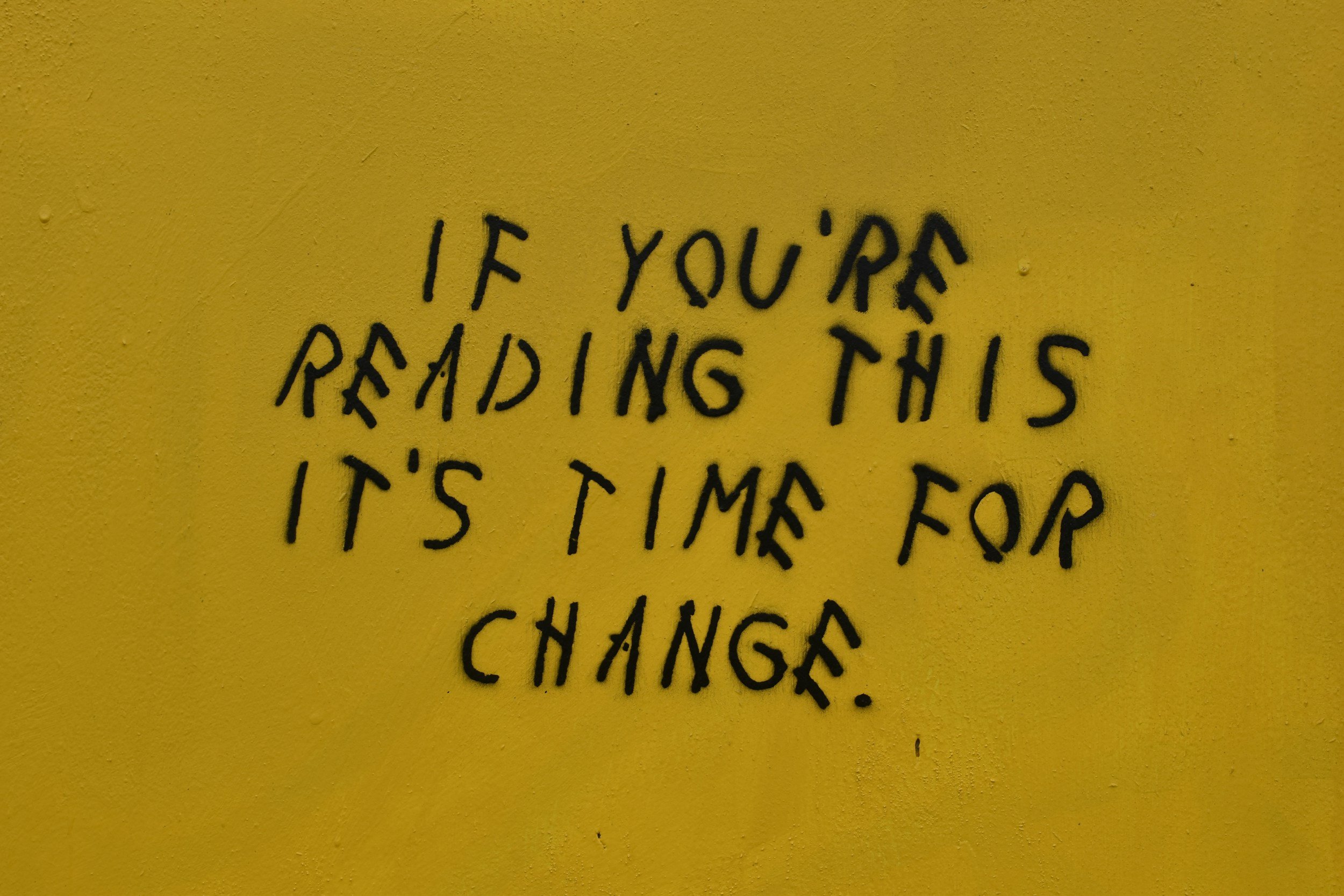
Most people don’t struggle with wanting to change.
What they struggle with is following through long enough to actually see that change happen.
You’ve probably experienced some version of this yourself.
At some point, you decide it’s time to get things back on track. You start working out again, you clean up your nutrition, and for a little while, things feel different.
There’s momentum.
You feel more in control, more optimistic – like you’ve finally turned a corner.
But then life inevitably steps in.
A stressful week shows up. Your routine gets disrupted.
You miss a couple workouts, your schedule gets thrown off…
And before long, you find yourself slipping back into the same patterns you were trying to move away from.
It doesn’t always happen all at once – it’s often gradual.
Subtle enough that you don’t notice it right away, but familiar enough that it feels frustrating when you do.
That cycle is incredibly common.
And despite what most people assume…
It’s usually not a motivation problem.
It’s Not a Motivation Problem-It’s a Systems Problem
Motivation gets a lot of attention because it’s easy to feel and easy to talk about.
It’s that initial surge of energy you get when you decide to make a change. It’s what gets you started.
But it’s not what keeps you going.
Research in behavioral psychology shows that long-term behavior change is driven far more by habit formation and environmental structure than by motivation alone (1).
In other words:
Motivation can help you begin… but it’s not reliable enough to carry you through the parts where life becomes inconvenient, stressful, or unpredictable.
That’s where most people run into friction.
The Intention–Behavior Gap
There’s a well-documented concept in behavior science called the intention–behavior gap.
It describes the disconnect between what people plan to do… and what they consistently follow through on over time.
Most people already know what they should be doing.
They understand the basics of training.
They know nutrition matters.
They know consistency is important.
But knowing what to do–and having a system that allows you to keep doing it–are two very different things.
Why Most Fitness Approaches Fall Apart
A lot of fitness approaches unintentionally make this harder.
They rely on:
High levels of motivation
Rigid, all-or-nothing plans
Expectations that don’t hold up in real life
And to be fair… these approaches can work in the short term.
They often produce quick bursts of progress, which makes them appealing.
The problem is what happens when real life inevitably interferes.
Busy schedules, stress, unexpected changes – these aren’t rare events. They’re normal.
And when an approach isn’t built to account for that… it tends to fall apart.
Not because you failed.
But because the structure wasn’t designed to handle reality.
What Actually Works Long-Term
When you look at what works long-term, a few patterns show up consistently.
Successful approaches are:
Structured enough to remove guesswork
Progressive enough to drive results
Flexible enough to adapt when life gets messy
From a training perspective, this is where principles like progressive overload matter.
Gradually increasing the demands placed on the body gives it a reason to adapt – improving strength, muscle mass, and overall health over time.
Research consistently supports this, showing that structured, progressive resistance training produces more reliable results than unstructured activity (2).
But just as important as the training itself… is how that training fits into your life.
Because the most effective plan isn’t the one that works perfectly for two weeks.
It’s the one you can keep showing up for when things aren’t ideal.
The Hidden Resistance: Fear of Change
Here’s the part that doesn’t get talked about enough.
Even when someone wants to change…
There’s often a deeper resistance underneath it.
Fear.
Not just fear of failure.
But fear of:
Discomfort
Being a beginner
Being judged
Letting go of old habits
Outgrowing an identity that feels familiar
And here’s the big one:
Fear of change itself – even when the change is positive.
From a neurological standpoint, this makes sense.
Your brain is wired to prioritize safety, not progress. Novelty–even good novelty–can be interpreted as a potential threat. The amygdala (the brain’s threat detection system) becomes more active when we step into unfamiliar territory (5).
So when you try to change your habits…
Your nervous system doesn’t automatically see “growth.”
It sees “different.”
And different can feel unsafe.
“If I Change… Who Do I Become?”
Real change doesn’t just shift your habits.
It shifts your identity.
If you start…
Training consistently.
Eating differently.
Showing up in a new way.
You’re no longer the same person you were before.
And that raises questions most people don’t consciously think about:
Who do I become if I actually follow through?
What if I don’t recognize that version of myself?
What if I can’t maintain it?
What if I become someone new… and I’m not sure I trust that yet?
This is where a lot of people subconsciously pull back.
Because staying the same–even if it’s not benefiting you–feels familiar.
And familiarity feels safe.
Research in identity-based behavior change shows that people are far more likely to maintain habits that align with their self-concept–and resist ones that challenge it (4).
So if your identity is still tied to:
“I’m someone who struggles with consistency”
or
“I’ve never done this before.”
Then even your best efforts can feel like you’re fighting yourself.
Why Simplicity and Structure Matter More Than Intensity
Every extra decision you have to make throughout the day creates friction.
What should I eat?
When should I train?
What if I miss a day?
On their own, those decisions don’t seem like much.
But over time, they add up.
And when life gets busy… that friction becomes the reason you fall off.
Reducing that friction is one of the most practical ways to make change stick.
When your:
Training is structured
Nutrition is straightforward
Expectations are realistic
You don’t have to rely on willpower in the same way.
You’re simply following a system that’s already been thought through.
It Was Never About Discipline
If you’ve struggled with consistency in the past…
It’s worth considering this:
It probably wasn’t…
A lack of effort.
That you didn’t care enough.
That you weren’t capable.
More often, it’s the approach required:
More time than you had
More energy than you could give
More perfection than real life allows
When the system changes…
The outcome usually follows.
Where Real Change Starts
At its core, sustainable change isn’t about doing everything perfectly.
It’s about building something you can continue to show up for…
Even when:
Your schedule is full
Your energy is low
Things don’t go exactly as planned
And learning to sit with the discomfort of becoming someone new–long enough for it to feel natural.
That’s where real progress starts to take hold.
Ready for a Different Approach?
If you’re looking for an approach like that–one built around structure, progression, and the reality of your day-to-day life–
Doors to the Lock & Key Collective are now open for a limited time.
Tap below to learn more.
Sources
Lally, P. et al. (2010). How are habits formed: Modelling habit formation in the real world. European Journal of Social Psychology.
Schoenfeld, B.J. (2010). The mechanisms of muscle hypertrophy and their application to resistance training.
Schoenfeld, B.J. et al. (2017). Dose-response relationship between weekly resistance training volume and increases in muscle mass.
Oyserman, D. (2009). Identity-based motivation: Implications for action-readiness, procedural-readiness, and consumer behavior.
Schultz, W. (2016). Dopamine reward prediction error coding and uncertainty: Implications for fear and novelty processing.