
Why Am I Not Losing Weight in a Calorie Deficit? 9 Tracking Mistakes That Add Up
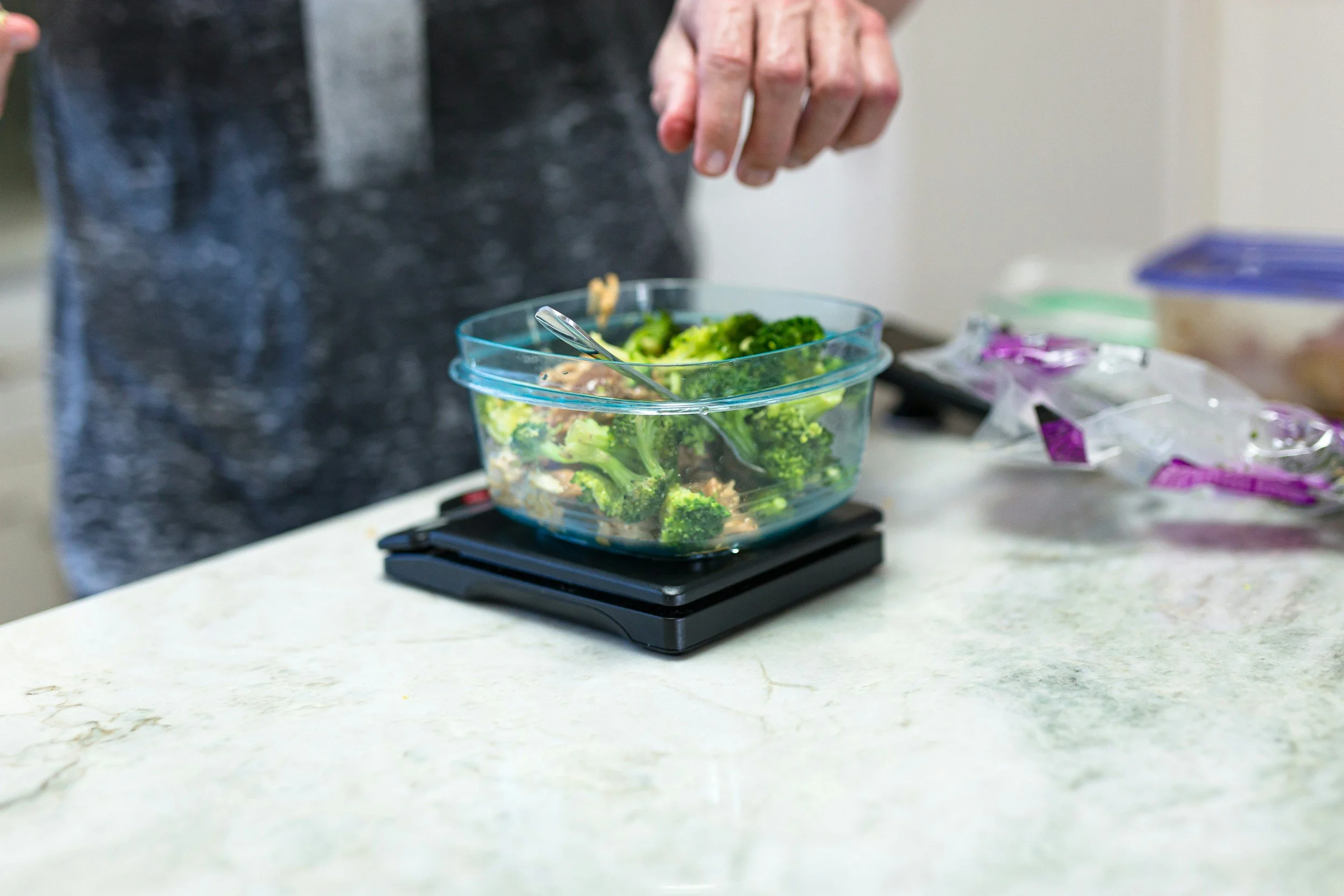
You’re tracking your food.
You’re trying to hit your calories.
You’re making better choices, reading labels, saying “no thanks” to the office donuts, and entering chicken breast into your app like a responsible little nutrition accountant.
And yet…the scale is not moving.
Or it moves for two days, pops back up, and ruins your entire day before 8 a.m.
So naturally, you start wondering:
Why am I not losing weight in a calorie deficit?
The frustrating-but-useful answer?
You might not be in a consistent calorie deficit.
That does not mean you’re not trying.It does not mean your metabolism is broken.It does not mean carbs are evil, your hormones hate you, or your body has entered some mysterious “starvation mode” bunker where fat loss goes to die.
It usually means your data needs an audit.
Because here’s the thing: most people are eating more than they think they are. Not because they’re lying or because they “don’t want it badly enough.” But because humans are genuinely not great at estimating food intake.
Research comparing self-reported intake to more objective methods has repeatedly found that people tend to underreport how much they eat. In one well-known study on people who reported difficulty losing weight despite low calorie intake, researchers found a large discrepancy between reported and actual intake. Reviews using doubly labeled water, a gold-standard method for measuring energy expenditure, have also shown widespread underestimation of energy intake. [1, 2, 3]
In normal human words?
Your food log can look perfect and still be missing enough calories to erase the deficit you think you’re creating.
And honestly? That’s good news.
Because if the problem is your tracking system, that means you have something you can fix.
And fixing your tracking system is much simpler than trying to “fix” your hormones or your metabolism.
Let’s break down the most common reasons you might be tracking nutrition but not seeing progress – and what to do about it.
First, what does it mean to be in a calorie deficit?
A calorie deficit means your body is taking in less energy than it uses over time. Body weight regulation is more complicated than a simple calculator equation, but energy balance still matters.
Research on energy balance shows that changes in body weight are tied to the relationship between energy intake, energy expenditure, and how the body adapts over time. [4]
That last part matters: over time.
A calorie deficit is not one low-calorie meal.
It is not one “good” day.
It is not Monday through Thursday before Friday night turns into a margarita-fueled side quest.
A calorie deficit has to be consistent enough, for long enough, to create measurable change.
So if you’re asking, “Why am I not losing weight in a calorie deficit?” the first question is:
Are you in a calorie deficit on paper, or are you in a calorie deficit in real life?
Because those are not always the same thing.
1. You’re tracking meals, but not bites, licks, and tastes
This is the classic.
You track:
– Breakfast.– Lunch.– Dinner.
– Your planned snack.
But you don’t track:
The “tiny” spoonful of peanut butter while making breakfast
The few bites of your partner’s fries
The cheese you grabbed while cooking
The “just a taste” of cookie dough
The handful of cereal while standing in the pantry
The bites of your kid’s mac and cheese
The protein bar you took “just a corner” from and somehow ate 70% of
These calories count.
They do not stop counting because:
– You were standing up.– They were eaten off someone else’s plate.– Your tracking app did not personally witness the crime.
This is not about obsessing over every crumb for the rest of your life. It’s about understanding that if your progress is stalled, the small stuff is often where the answer is hiding.
A 100-200 calorie gap here and there may not sound like much. But if your intended deficit is only 300-500 calories per day, those “little things” can quietly wipe out a big chunk of it.
What to do instead:For the next few weeks, track everything – long enough to get honest data.
If it goes in your mouth, it goes in the log.
Yes, even the tiny bite.Especially the tiny bite.Tiny bites are sneaky little deficit-killers.
2. You’re forgetting beverages
A lot of people track food and forget drinks.
But liquids can be a huge source of untracked calories.
Common culprits include:
Coffee creamer
Lattes
Alcohol
Juice
Smoothies
Soda
Energy drinks
Sports drinks
Milk
“Healthy” bottled drinks
Fancy coffee drinks that are basically dessert wearing a business casual outfit
This is especially common with coffee.
Someone will log their eggs, toast, and fruit, but forget that their morning coffee has 200 calories of creamer, syrup, milk, or sugar in it.
If you’re tracking calories and not losing weight, drinks need to be part of the audit.
What to do instead:Track beverages the same way you track meals.
Measure your creamer for a week. Track your alcohol. Log the smoothie. If your drink contains calories, it belongs in the data.
And before you panic: this does not mean you can never have fun coffee or cocktails again. It just means they need to fit into the plan instead of floating around in calorie limbo.
3. You’re not tracking oils, sauces, dressings, and condiments
This one gets people all the time.
They track the chicken breast, rice, and vegetables.
But they forget the olive oil in the pan.The ranch.The aioli.The barbecue sauce.The salad dressing.The butter.The mayo.The pesto.The “little drizzle” that turned into 4 tablespoons.
These foods are not bad. In fact, fats and sauces can help with nutrient absorption and often make meals more satisfying, which can help you stick to your nutrition plan.
But calorie-dense extras can add up quickly.
A tablespoon of oil is usually around 120 calories. Two tablespoons of dressing can easily be 100-150 calories. A couple sauces across the day can be the difference between “I’m in a deficit” and “I am maintaining my weight with extra steps.”
Research on dietary reporting shows that self-reported intake is prone to measurement error, and not all foods are misreported equally. Higher-energy foods and added fats can be easy to underestimate or omit. [5]
What to do instead:Track the ingredients that make your food taste good.
You do not need to eat sad, dry chicken while staring out the window questioning your life choices. Just track the sauce.
Flavor is allowed. Data is required.
4. You’re eyeballing portions instead of weighing food
If you are not weighing your food, your tracking is an estimate.
Sometimes that estimate is close enough.
Sometimes it is a beautiful work of fiction.
Portion-size estimation is one of the biggest sources of error in dietary tracking. Research on portion estimation has shown that inaccurate portion-size reporting can significantly affect dietary assessment accuracy. [6, 7]
This is especially true for foods like:
Nut butters
Oils
Granola
Cereal
Pasta
Rice
Nuts
Avocado
Cheese
Dressings
Snack foods
Anything you “just know” is one serving because you spiritually feel it
Let’s talk peanut butter.
A serving is usually 2 tablespoons, around 32 grams. But a “tablespoon” scooped with confidence and zero measurement can easily be much more than that.
And no, the spoon from your silverware drawer is likely not a tablespoon.
Same with rice, pasta, granola, and cereal. What looks like one serving can easily be one and a half or two servings.
If you’re not seeing progress, weighing food can provide eye-opening information.
What to do instead:Use a food scale for the foods that are easiest to overeat or mismeasure.
You probably do not need to weigh lettuce.But peanut butter? Granola? Oil? Rice? Pasta? Cheese?
Those deserve a scale check.
Try weighing your common foods for two weeks. You will probably learn a lot very quickly.
5. You’re using inaccurate entries in your tracking app
Nutrition apps like myfitnesspal are helpful.
They are also full of user-generated chaos.
One food might have 12 different entries, and somehow they all say something different.
You search “chicken breast” and find:
Chicken breast, cooked
Chicken breast, raw
Chicken breast, grilled
Chicken breast, generic
Chicken breast, entered by a man named Brad in 2012 who may have been guessing
The same issue happens with restaurant meals, packaged foods, homemade recipes, and barcode scans.
Common app mistakes include:
Logging cooked weight when the entry is for raw weight
Logging raw weight when the entry is for cooked weight
Choosing a generic entry that is wildly inaccurate
Forgetting to adjust serving size
Using entries without checking the label
Logging restaurant meals as if the restaurant lovingly measured every gram of oil for you
They did not.
Restaurants are delicious because they are not shy with oil, butter, sauces, and portion sizes.
What to do instead:When possible, use verified entries, do a Google search to check for accuracy, scan labels, or manually enter foods from the nutrition label.
For meats, rice, pasta, and other foods that change weight during cooking, be consistent. If you weigh it raw, use a raw entry. If you weigh it cooked, use a cooked entry.
The magic is not in the app.
The magic is in accurate inputs.
6. You’re logging after the fact
Logging after you eat can work sometimes.
But if you’re consistently logging at the end of the day, you’re relying on memory – and memory can be fuzzy after a long day.
Dietary assessment research consistently shows that self-reported intake is vulnerable to error. Some of that error comes from portion estimation, some from omissions, and some from imperfect recall. [8]
You may forget:
The snack you grabbed between meetings
The extra creamer
The second serving
The handful of chips
The sauce
The “just one” piece of chocolate
Logging after the fact can also create a second problem: you might discover at 7 p.m. that you only have 73 calories left and still need 50 grams of protein.
That is not a plan. That is a hostage situation.
What to do instead:Pre-log when you can.
You do not have to plan every bite of your life like a bodybuilder with a spreadsheet addiction. But logging your main meals ahead of time gives you a target.
It turns tracking from a guilt-ridden recap into a decision-making tool.
And that is what nutrition tracking is supposed to be.
Not a judge.Not a moral scoreboard.A tool.
7. You’re skipping weekends or “off” days
This is one of the biggest reasons someone can be tracking calories but not losing weight.
They track exceptionally Monday through Friday afternoon.
Then the weekend becomes a fog machine of brunch, snacks, drinks, takeout, and “I’ll get back on track Monday.”
And again: nothing wrong with brunch. Nothing wrong with fun. Nothing wrong with having a life.
But your body tracks weekly averages, not your intentions.
If you’re in a 400-calorie deficit Monday through Friday, that creates a 2,000-calorie weekly deficit.
But if Saturday and Sunday add 1,000 extra calories each day, the weekly deficit is gone.
This is why it can feel like you’re “doing everything right” when you’re actually only looking at part of the picture.
What to do instead:Track weekends, too.
It’s data.
If weekends are consistently blowing up your deficit, the solution is not necessarily to be stricter. Sometimes the solution is to build a more realistic weekday plan, so you’re not white-knuckling your way to Friday night.
A solid plan should make room for meals out, social events, and foods you enjoy.
But it still needs structure.
8. You’re changing the plan before you have enough data
A lot of people do this:
They track for four days. The scale does something rude. They cut calories. Then they have a high-calorie weekend. Then they add cardio. Then they change macros. Then they switch apps. Then they decide nothing works.
Respectfully: we have no idea what worked because the plan did not survive long enough to provide evidence.
Fat loss requires enough consistency to see a trend.
Research on self-monitoring suggests that more consistent dietary tracking is associated with better weight-loss outcomes. Systematic reviews and intervention studies have found that self-monitoring is a central behavior in weight-management programs, and more frequent logging tends to be linked with greater weight loss. [9, 10]
That does not mean food tracking is magic.
It means consistent data helps you make better decisions.
If you change everything every few days, you are not troubleshooting. You are playing metabolic whack-a-mole.
What to do instead: Give your plan enough time to produce a trend.
A good rule of thumb: track consistently for at least two to four weeks before assuming the plan is broken.
During that time, look at:
Weekly average body weight
Measurements
Progress photos
Training performance
Hunger
Energy
Sleep
Menstrual cycle phase, if applicable
Digestion
Consistency with food tracking
Consistency with steps and training
Remember: You can gain muscle and lose body fat at the same rate.
Some weeks the scale won't change – which is why you need to look at other factors like progress photos and measurements.
One weigh-in does not tell the story.
A trend does.
9. You’re mistaking water weight for lack of fat loss
This is especially important if you train hard.
The scale does not only measure body fat.
The scale measures:
Muscle
Bone
Organs
Food volume
Water
Glycogen
Stool
Sodium changes
Inflammation
Hormonal fluctuations
You can be losing fat and still see the scale stall temporarily because of water retention.
This is common around the menstrual cycle. One study found an average body weight increase of about 0.5 kg during the menstrual cycle, mostly due to extracellular fluid retention around menstruation. [11]
Hard training can also create temporary inflammation and muscle damage, especially when you start a new program, increase volume, or do a lot of eccentric work. Exercise-induced muscle damage involves inflammatory and structural changes in muscle tissue, which can affect how your body feels and may contribute to short-term scale weirdness. [12]
This is why the scale can be useful, but also dramatic.
Very dramatic.
Oscar-worthy, honestly.
What to do instead: Compare your body weight trends over time, not day to day.
If you have a menstrual cycle, compare similar phases of your cycle. For example, don’t compare your lowest weight after your period to your highest weight right before your next one and then decide your plan failed.
That is not data analysis. That is self-sabotage with a calculator.
Use weekly averages. Look at monthly patterns. Pair scale weight with measurements, photos, strength, and how your clothes fit.
So…why are you not losing weight in a calorie deficit?
If you are truly in a consistent calorie deficit for long enough, body fat will decrease.
But if you are not losing weight, one of three things is usually happening:
You are not in the deficit you think you are.
You have not been consistent long enough to see the trend.
You are losing fat, but water retention or normal scale fluctuations are hiding it temporarily.
The most common issue?
Your intake is higher than you think.
Nutrition tracking is a skill. Most people aren’t missing the mark because they’re careless. They’re missing the mark because no one taught them how to do it accurately, calmly, and consistently.
They were told to “just track your food,” which sounds simple until you realize you have to understand labels, serving sizes, cooked versus raw weights, restaurant estimates, weekend averages, menstrual cycle fluctuations, and why a tablespoon from your drawer is likely not a tablespoon.
No wonder so many people give up before it has a chance to pay off.
How to fix your tracking without becoming obsessive
The goal is not to track every gram of food forever.
The goal is to build enough awareness that you can make informed choices.
Here’s a simple tracking audit:
For the next 14 days:
Track all meals
Track all snacks
Track beverages
Track oils, sauces, dressings, and condiments
Weigh your foods
Use accurate app entries
Log before or immediately after eating
Track weekends
Keep your calories consistent
Watch your weekly average weight, not one random weigh-in
This is not a life sentence.
This is a data collection phase.
Think of it like turning the lights on.
You are not judging the room. You are just trying to see where the furniture is so you stop smashing your shin into the same coffee table every week.
What if your tracking is accurate and you’re still not losing?
If you have been genuinely consistent for several weeks and your weight trend, measurements, and photos are not changing, it may be time to adjust.
Possible next steps include:
Reducing calories slightly
Increasing daily steps
Improving protein and fiber intake for satiety
Tightening weekend consistency
Adjusting restaurant meals or alcohol
Reviewing sleep and stress
Looking at training consistency, volume, and recovery
Check progress photos and measurements for physical changes
But the first step is still accurate data.
Not because nutrition is only math.
Because guessing makes everything harder.
The encouraging truth
If you’re tracking nutrition but not seeing progress, it can feel like a calorie deficit doesn’t work.
But a calorie deficit and tracking is proven to work – your system might just need a tune-up.
The solution is not to eat as little as possible. It is not to cut every carb. It is not to punish yourself with extra cardio. It is not to throw your food scale into the woods and declare war on MyFitnessPal.
The solution is to get better data, look at patterns, and make strategic adjustments.
Small mistakes add up.
But so do small improvements.
Tracking your creamer counts.Weighing your peanut butter counts. Logging weekends counts. Pre-logging your meals counts. Staying consistent long enough to see a trend counts.
That is how progress gets built.
Not through perfection.
Through honest, repeatable systems.
Ready to stop guessing?
If you’re tracking your nutrition but still feel like you’re throwing numbers into the void, the problem might not be your effort.
It might be your system.
Inside the Lock & Key Collective, we give you a proven training, nutrition, and consistency path that moves the needle – without fear-mongering, fad diets, or pretending cauliflower rice is superior to real rice.
Join the Lock & Key Collective waitlist and be the first in line when doors open for our next training cycle.
Because you don’t need another reset.
You need a proven plan that takes your fitness to the next level.