
Calories In, Calories Out Is Only Half the Story: Why Metabolic Health Matters
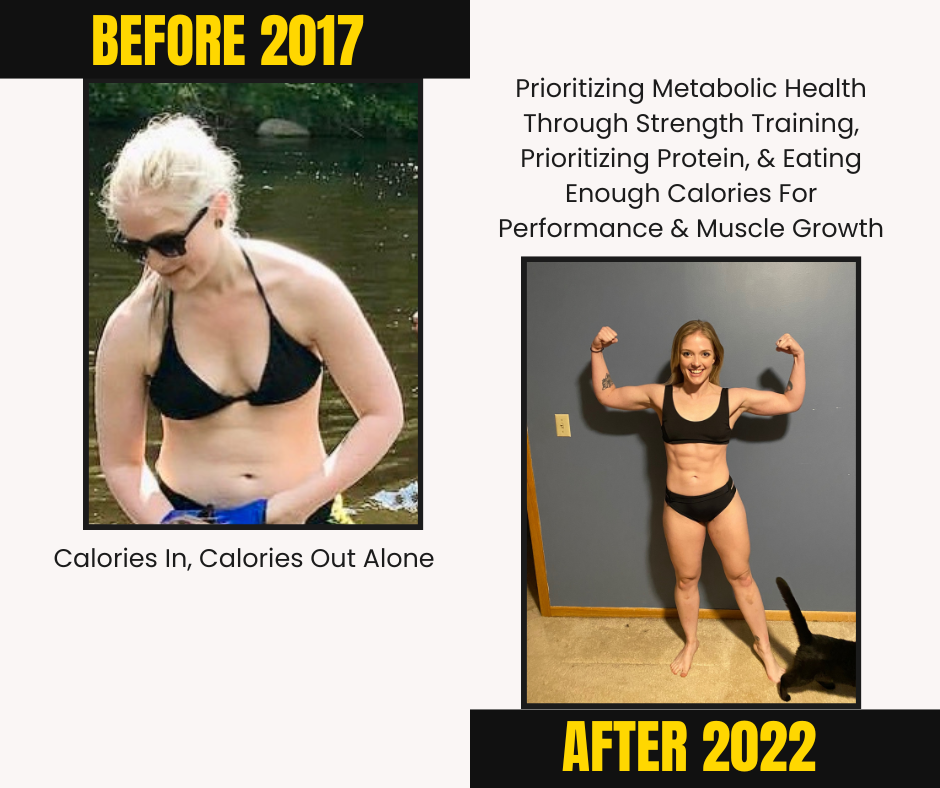
For years, the most common explanation for weight loss has sounded something like this:
“It’s all about calories in, calories out.”
Eat fewer calories.
Burn more calories.
Lose weight.
Although over-simplified, this idea isn’t wrong. Calories are units of energy, and body weight is influenced by the balance between energy consumed and energy burned.
But this explanation leaves out a crucial piece of the puzzle – something that determines whether your body handles those calories efficiently or struggles to do so.
That missing piece is metabolic health.
Calories determine how much energy enters the system.
Metabolic health determines how well the system runs.
And one of the biggest drivers of metabolic health – something many diets completely ignore – is muscle mass.
When you understand this, nutrition stops being about simply eating less. Instead, it becomes about building a body that uses energy well.
A Helpful Analogy: Calories Are the Fuel – Metabolism Is the Engine
Imagine two cars.
Both cars receive the same amount of fuel.
One car has a powerful, well-maintained engine. It converts fuel efficiently, accelerates smoothly, and runs reliably.
The other car has a poorly tuned engine. It burns fuel inefficiently, struggles to accelerate, and breaks down more often.
The amount of fuel going into the tank is the same.
But the performance of the engine is very different.
Your body works in a similar way.
Calories represent the fuel entering the system.
Your metabolism is the engine that determines how that fuel is used.
And one of the biggest factors that determines how well that engine runs is the amount of muscle tissue you have.
What “Calories In Calories Out” Actually Means
Calories represent energy from food.
Your body uses that energy for countless biological processes:
powering the brain and nervous system
regulating body temperature
fueling movement
supporting organ function
repairing tissue
building muscle
The energy balance equation looks like this:
Calories In:
Food and beverages you consume.
Calories Out:
Energy burned through:
Basal metabolic rate (the energy your body needs to stay alive – like breathing)
Physical activity
Exercise
Digestion and nutrient processing
If calories consumed exceed calories burned, body weight tends to increase.
If calories burned exceed calories consumed, body weight tends to decrease.
So yes – calories matter.
But this equation assumes something that often isn’t true:
that every body processes calories the same way.
And that’s where metabolic health enters the conversation.
The Missing Piece: Metabolic Health
Metabolic health refers to how efficiently your body:
regulates blood sugar
responds to insulin
uses carbohydrates and fat for energy
stores or burns calories
maintains stable energy levels
Two people can eat the same number of calories and exercise the same amount yet experience very different results.
One feels energized and strong.
The other feels exhausted, constantly hungry, and struggles to make progress.
Why?
Because their metabolic health is different.
And one of the biggest drivers of metabolic health is muscle mass.
Muscle: Your Body’s Metabolic Powerhouse
Most people think of muscle primarily in terms of appearance or strength.
But biologically, muscle plays a much larger role.
Skeletal muscle is one of the most metabolically active tissues in the body and is central to how your body regulates energy.
In fact, skeletal muscle accounts for roughly 70-80% of insulin-stimulated glucose uptake, making it the primary site where blood sugar is cleared from the bloodstream after meals. (1)
This means that when you eat carbohydrates, a large portion of that glucose is absorbed by your muscle tissue.
More muscle provides:
more storage space for glucose
better blood sugar control
improved insulin sensitivity
Higher levels of skeletal muscle mass are consistently associated with improved insulin sensitivity and lower risk of metabolic disease (4).
In other words:
Muscle doesn’t just move your body.
It helps regulate your metabolism.
The “Glucose Sink”: A Visual Metaphor
A helpful way to understand muscle’s role in metabolism is to think of muscle as a glucose sink.
Imagine pouring water into two different sinks.
One sink is large and deep. It easily holds the water.
The other sink is small and shallow. It fills quickly and begins to overflow.
Glucose in the bloodstream works in a similar way.
After you eat, your body needs a place to store incoming glucose.
Muscle tissue acts as the largest reservoir for that glucose.
When muscle mass is high, glucose is absorbed efficiently and blood sugar remains stable.
When muscle mass is low, the body has fewer places to store that energy – which can lead to elevated blood sugar and metabolic strain.
Strength training effectively builds a bigger sink for your body to handle energy.
Muscle and Insulin Sensitivity
Insulin sensitivity is one of the most important markers of metabolic health.
When insulin sensitivity is high:
cells respond efficiently to insulin
glucose moves quickly into tissues
blood sugar remains stable
energy levels are more consistent
When insulin sensitivity is poor, the body struggles to regulate blood sugar effectively, increasing the risk of metabolic diseases like type 2 diabetes.
Because skeletal muscle is the primary site of insulin-mediated glucose disposal, increasing muscle mass improves the body’s ability to regulate blood sugar (2).
Resistance training has repeatedly been shown to improve insulin sensitivity and glucose regulation (3).
In simple terms:
Stronger muscles help your body handle calories better.
Muscle and Metabolic Flexibility
Another key component of metabolic health is metabolic flexibility.
Metabolic flexibility refers to your body’s ability to switch between different fuel sources depending on what it needs.
A metabolically flexible body can:
burn carbohydrates efficiently after meals
burn fat between meals or during activity
maintain stable energy levels throughout the day
People with poor metabolic flexibility often experience:
energy crashes
strong cravings
difficulty losing fat
difficulty maintaining weight
Skeletal muscle plays a major role in this system because it is heavily involved in both carbohydrate and fat metabolism (6).
The more healthy muscle tissue you have, the better your body becomes at managing energy.
Why Weight Loss Alone Often Backfires
Many diets focus almost exclusively on reducing calories.
While this can lead to weight loss, it often creates a major problem:
people lose muscle along with fat.
When muscle mass decreases:
resting metabolic rate may decline
insulin sensitivity can worsen
metabolic efficiency drops
This is one reason many people lose weight initially but struggle to maintain their results.
Research shows that preserving muscle mass during weight loss is critical for maintaining metabolic health and long-term weight regulation (5).
This is why focusing only on the number on the scale can sometimes lead people away from the very thing that would help them most.
A Better Goal: Build Muscle While Improving Nutrition
Instead of focusing only on losing weight, a more powerful strategy is focusing on improving body composition and metabolic health.
For most people, this means prioritizing:
resistance training
adequate protein intake
whole, minimally processed foods
quality sleep
consistent daily movement
These habits help support muscle growth and improve metabolic health at the same time.
When metabolic health improves, fat loss often becomes easier and more sustainable.
The Real Goal Isn’t Just Weight Loss – It’s Metabolic Strength
When people focus only on calories in calories out, they often miss one of the most powerful levers for improving their health and fat loss goals:
building and maintaining muscle.
Muscle doesn’t just change how your body looks.
It changes how your body processes energy, regulates blood sugar, and supports long-term health.
People with greater muscle mass often experience:
more stable energy
better training progress
improved body composition
stronger metabolic health
lower risk of chronic disease as they age
better relationship with themself
But there’s another benefit that often gets overlooked…
People often think that they’ll feel more confident when they lose weight.
But we’ve seen time and time again that people feel more confident when they build muscle
When you build strength, you build confidence.
You feel more capable in your body.
More resilient in your habits.
More certain that the work you’re putting in is actually moving you forward.
In other words, you’re not just chasing a smaller number on the scale.
You’re building a body that supports you for decades to come.
Want Help Building a Stronger Metabolism?
If you want to improve your metabolism, build muscle, and develop habits that support long-term health, that’s exactly what we focus on inside our coaching community.
Inside The Lock & Key Collective, members follow structured strength training programs, learn how to fuel their bodies with high-quality nutrition, and get the support and accountability needed to stay consistent.
We focus on building strength, metabolic health, and sustainable habits – not crash dieting or extreme restriction.
Doors to the Lock & Key Collective will be opening soon.
If you’d like to learn more about how the program works and see if it’s a good fit for you, click the link to learn more.
Sources
DeFronzo RA, Tripathy D. (2009). Skeletal muscle insulin resistance is the primary defect in type 2 diabetes. Diabetes Care.
DeFronzo RA et al. (2015). Pathogenesis of type 2 diabetes mellitus. Medical Clinics of North America.
Holten MK et al. (2004). Strength training increases insulin-mediated glucose uptake in patients with type 2 diabetes. Diabetes.
Srikanthan P, Karlamangla AS. (2011). Relative muscle mass is inversely associated with insulin resistance. Journal of Clinical Endocrinology & Metabolism.
Weinheimer EM et al. (2010). The effects of calorie restriction and exercise on body composition. Nutrition Reviews.
Kelley DE, Mandarino LJ. (2000). Fuel selection in human skeletal muscle in insulin resistance. Diabetes.