
Every few months, another miracle food comes along promising to help people burn fat faster.
Grapefruit. Apple cider vinegar. Celery juice. Some exotic fruit or supplement with a slick marketing campaign behind it.
And somehow, people keep buying into it.
Here’s the reality:
There are no magical fat-burning foods.
Losing body fat requires consistently consuming fewer calories than your body uses over time.
But that doesn’t mean all foods are equally helpful when you’re trying to get leaner.
Certain foods can make fat loss considerably easier.
They help manage hunger, provide valuable nutrients, and support the muscle you’ve worked hard to build.
And when you’re not constantly fighting hunger, sticking with your nutrition plan becomes a whole lot easier.
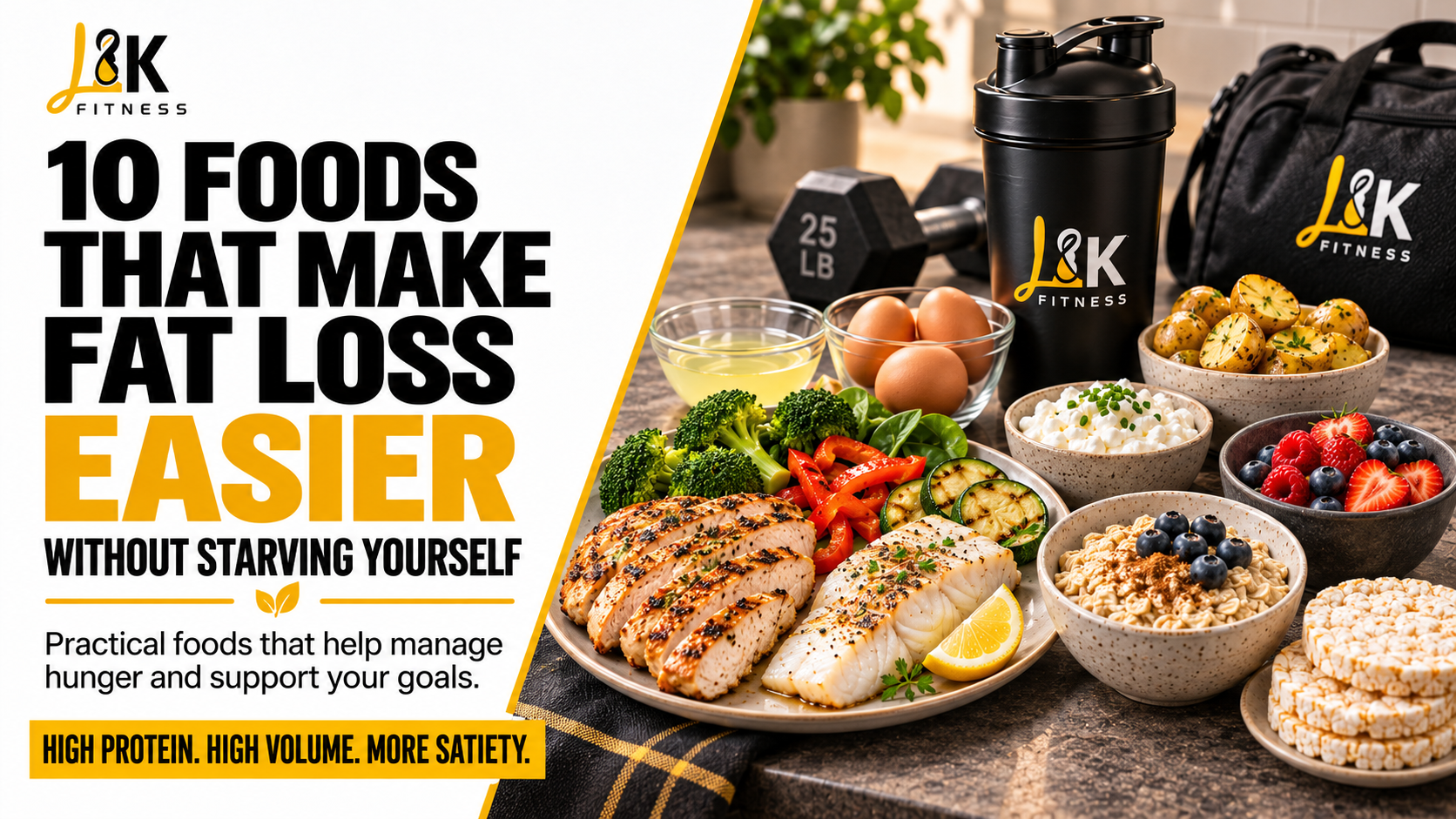
Here are ten foods worth keeping in your rotation.
1. Lean Meats
Chicken, turkey, and lean cuts of beef are excellent sources of protein.
Protein helps preserve muscle during fat loss, supports recovery, and generally provides greater satiety than comparable amounts of fat or carbohydrates.
Coach’s Tip: Build your main meals around a quality protein source.
2. White Fish
Cod, haddock, pollock, and tilapia provide substantial protein without a ton of calories.
A typical 6-ounce cooked serving of cod delivers roughly 35-40 grams of protein.
That’s a pretty solid return on your calorie investment!
Coach’s Tip: Bake, grill, or air-fry fish with your favorite seasonings.
3. Eggs and Egg Whites
Whole eggs provide high-quality protein and valuable nutrients, while egg whites allow you to increase protein without adding much fat.
Combining the two is an easy way to make a satisfying, protein-rich meal.
Coach’s Tip: Try two whole eggs with additional egg whites and vegetables.
4. Potatoes
Yep. Potatoes!
Despite their reputation in certain diet circles, plain potatoes can be remarkably filling relative to their calorie content.
They also provide potassium and carbohydrates to fuel your training.
The difference between a baked potato and a large serving of fries isn’t that the potato suddenly became unhealthy.
It’s the additional calories that come with how it’s prepared.
Coach’s Tip: Roast or air-fry potatoes with measured amounts of oil.
5. Vegetables
Vegetables provide fiber, water, and important micronutrients while adding considerable volume to your meals.
That means you can eat a substantial amount of food without consuming an enormous number of calories.
And contrary to what some people seem to believe, vegetables don’t have to taste like punishment.
Coach’s Tip: Add generous servings to your meals. Season them well, and prepare them in ways you actually enjoy.
6. Cottage Cheese
Cottage cheese is convenient, versatile, and packed with protein.
Depending on the variety, a cup can provide approximately 25 grams of protein.
It’s also a great option when you want something satisfying without spending much time preparing it.
Coach’s Tip: Try it with berries and cinnamon or your favorite savory seasonings.
7. Berries
Strawberries, blueberries, raspberries, and blackberries provide fiber, vitamins, and natural sweetness.
They’re relatively low in calorie density, making them a useful option when you’re craving something sweet.
Coach’s Tip: Pair berries with Greek yogurt or cottage cheese for a protein-rich snack.
8. Oatmeal
Oats have been unfairly demonized by some corners of the low-carb world.
But they provide carbohydrates, valuable nutrients, and fiber, including beta-glucan, which can help support fullness.
They’re also inexpensive, versatile, and easy to prepare.
Coach’s Tip: Add berries and a protein source to create a more balanced breakfast.
9. Casein Protein
Protein supplements aren’t mandatory, but they can make meeting your daily protein needs more convenient.
Casein protein can also be blended with ice, fruit, and a little liquid to create a thick, dessert-like snack.
It’s a slower-digesting protein, so you’ll stay full longer.
It’s not exactly ice cream, but it can certainly help scratch that itch!
Coach’s Tip: Use protein powders to fill nutritional gaps, not replace a varied diet.
10. Rice Cakes
Rice cakes might seem like an odd choice for this list.
And to be clear, they’re not particularly filling or nutrient-dense on their own.
But they’re relatively low in calories and can provide a convenient base for a snack.
Coach’s Tip: Pair them with lean turkey, cottage cheese, peanut butter, or another protein source.
The Real Secret: Calorie Density and Satiety
Here’s something we spend a lot of time helping clients understand:
The amount of food you eat and the number of calories you consume aren’t necessarily the same thing.
A tablespoon of olive oil contains roughly 120 calories.
So does a large bowl of strawberries.
Both can absolutely be part of a healthy diet.
But one provides considerably more physical volume for the calories.
That’s calorie density.
And understanding it can make managing your food intake much easier.
Foods like nuts, oils, avocado, and nut butters provide valuable nutrients, but they’re also relatively calorie-dense.
There’s nothing wrong with eating them.
Just recognize that portions matter.
And don’t forget about liquid calories!
Sweetened coffee drinks, regular soda, juice, and alcohol can contribute hundreds of calories without providing the same fullness you’d typically get from solid foods.
That doesn’t mean you can never enjoy them.
But if you’re struggling to maintain a calorie deficit, looking at what you’re drinking can be just as useful as examining what’s on your plate.
Putting It All Together
You don’t need to survive on tiny portions or eliminate entire food groups to lose body fat.
Instead, focus on building satisfying meals around:
A quality protein source
Fruits and vegetables
Appropriate portions of carbohydrates
Dietary fats in amounts that support your goals
For example, grilled chicken, roasted potatoes, and vegetables can provide a substantial, nutritious meal while keeping calories manageable.
And yes, you can still enjoy your favorite foods!
The goal isn’t perfection.
It’s developing an approach you can maintain.
The Bottom Line
Fat loss doesn’t require starvation, eliminating carbohydrates, or eating foods you hate.
It requires a consistent calorie deficit.
But choosing foods that help manage hunger, support muscle, and provide valuable nutrition can make that deficit much easier to maintain.
These ten foods aren’t magical.
They’re simply practical options that can help you get leaner while supporting your overall health.
And that’s what we’re interested in at Lock & Key Fitness.
Not just helping people lose weight.
Helping people build stronger, healthier bodies and habits they can maintain for years.
Ready for an individualized approach to your training and nutrition?
Learn More About The Lock & Key Collective